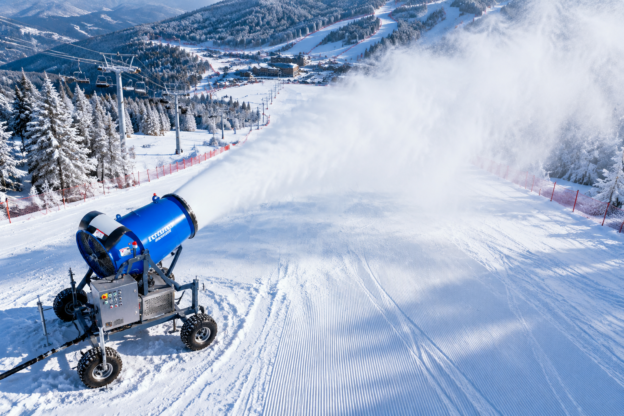
All-weather snowmaking, often powered by high-temperature snow making machines—is an engineered method of producing real snow without relying on sub-zero outdoor weather. Unlike conventional
snow guns, which need suitable wet-bulb conditions to freeze water droplets in the air, all-weather systems use refrigeration to create snow inside a controlled process — making them suitable for indoor snow parks, warm-climate attractions, and any project that needs reliable snow production outside the normal winter season.
Why Conventional Snowmaking Depends on Weather
Conventional snowmaking atomizes water into fine droplets and releases them through a snow gun. As droplets travel through cold, dry air, they freeze and fall as snow.
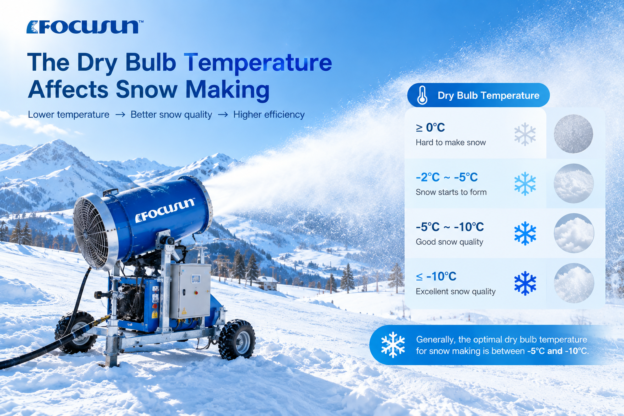
The key condition is wet-bulb temperature — air temperature combined with humidity. When it’s too high, droplets may not freeze fully before reaching the ground, and snow quality and output drop sharply. For outdoor resorts, this limits snowmaking windows to colder periods, usually at night or during winter weather.
How All-Weather Snowmaking Works
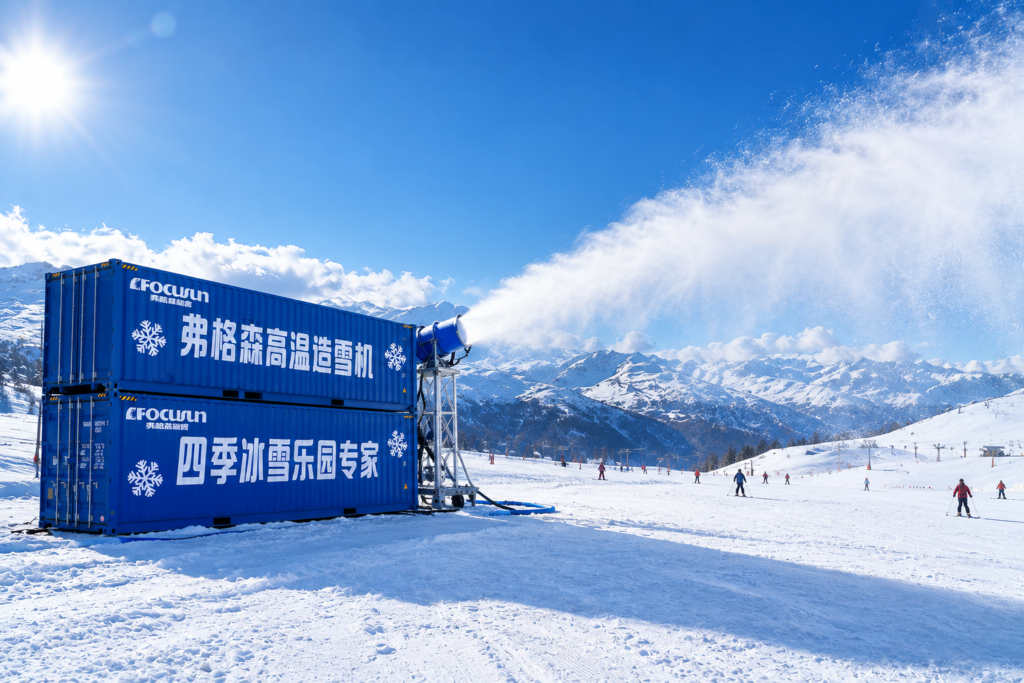
All-weather systems create freezing conditions inside the equipment rather than depending on the outdoor environment. Water is cooled and frozen through a refrigeration process, then formed into fine snow particles before delivery.
The exact process varies by machine design, but the principle stays consistent: snow production happens in a controlled system with its own cooling capacity — less dependent on outdoor temperature and humidity, which supports year-round operation in locations where conventional snow guns would have little or no operating window.
What Conditions Can It Operate In?
All-weather snowmaking is designed for environments where outdoor conditions don’t suit conventional snowmaking — indoor facilities, tropical destinations, desert regions, shopping malls, family entertainment venues, and seasonal events in warm cities.
The actual operating range depends on equipment model, cooling design, installation environment, ventilation, water supply and target snow quality — a project shouldn’t select equipment on ambient temperature alone. For indoor projects, the wider system matters just as much: insulation, refrigeration, humidity control, air circulation, drainage and snow grooming all affect final snow condition and operating cost.
Where Is All-Weather Snowmaking Used?
Indoor snow parks and ski slopes
Indoor facilities need stable snow production year-round, working alongside the venue’s cooling and air-handling infrastructure to hold a consistent surface.
Warm-climate resorts and attractions
Resorts without reliable winter temperatures use all-weather snowmaking for snow-play zones, training areas or seasonal visitor experiences.
Special events and temporary installations
Some projects need snow for a defined window rather than a full season — winter festivals, brand events, film productions, holiday attractions.
Ski Dubai is one of the best-known examples of a large-scale indoor snow destination in a hot climate. Its operating model shows why snow production, refrigeration, snow maintenance and building design have to be planned as one system.
All-Weather vs Conventional Snowmaking
| Factor |
Conventional Snowmaking |
All-Weather Snowmaking |
| Main freezing condition |
Cold, dry outdoor air |
Refrigeration inside the system |
| Weather dependence |
High |
Lower |
| Typical setting |
Outdoor ski resorts |
Outdoor and warm-climate projects |
| Production window |
Seasonal or weather-limited |
Can support year-round operation |
| Project focus |
Snow coverage during suitable conditions |
Reliable snow availability in controlled environments |
Neither solution is automatically better for every project. Conventional snowmaking works well where winter wet-bulb conditions are reliable; all-weather snowmaking suits locations where weather can’t provide a dependable production window.
What Should Project Teams Evaluate?
Before selecting an all-weather snowmaking system, define the operating objective first — a permanent indoor ski slope, a snow-play area, a seasonal attraction, or a temporary event?
Key questions to work through:
- How much snow is needed daily and during peak periods?
- What snow quality and surface condition does the venue require?
- What are the local ambient conditions and indoor design conditions?
- How much space is available for equipment, snow delivery, storage and maintenance?
- What water, power, drainage, ventilation and refrigeration infrastructure is available?
- How will snow be groomed, maintained and replenished after installation?
- What are the expected energy use, maintenance needs and operating hours?
A complete project assessment looks beyond the snowmaking machine itself — the strongest results come from matching snow production with building systems, operating plans and the visitor experience.
Ready to Plan Your Snow Production?
Talk to Focusun about matching an all-weather snowmaking system to your climate, venue and operating goals.
[ View the Equipment ] [ Read the Snow Park Case Study ]
Related Resources

 10-14-2026