Wet-bulb temperature is one of the most important weather measurements in conventional snowmaking. It combines air temperature and humidity to show how effectively water droplets can cool and freeze after leaving a snow gun.
For snowmaking teams, air temperature alone doesn’t tell the full story. Two days with the same temperature can produce very different snowmaking conditions if humidity levels differ — which is exactly why wet-bulb temperature, not the number on a weather app, is what actually decides whether a system can run.
Wet-Bulb Temperature in Simple Terms
Wet-bulb temperature is measured by allowing water to evaporate from a wetted surface, typically the bulb of a thermometer wrapped in a damp cloth. As that water evaporates, it pulls heat away from the surface — so the reading usually comes out lower than the standard air temperature, especially when the surrounding air is dry.
The drier the air, the faster that evaporation happens, and the bigger the gap between wet-bulb and air temperature. In humid air, evaporation slows down, and the two readings sit much closer together.
Why Wet-Bulb Temperature Matters for Snowmaking
The physical connection to snow production comes down to a simple chain of events:
- Snow guns atomize water into fine droplets.
- Those droplets need to lose heat and freeze before reaching the ground.
- Drier air supports faster evaporation, which cools the droplets further.
- Lower wet-bulb conditions generally create a better freezing environment.
In other words, wet-bulb temperature is a proxy for how much cooling power the air actually has available — not just how cold it reads on a thermometer.
More details: [How Does Snowmaking Work?]
Wet-Bulb Temperature vs Air Temperature
| Condition |
Air Temperature |
Humidity |
Likely Snowmaking Effect |
| Cold and dry |
Low |
Low |
More favorable freezing conditions |
| Cold and humid |
Low |
High |
Less favorable than the air temperature may suggest |
| Mild and dry |
Higher |
Low |
May still offer a limited operating window |
| Mild and humid |
Higher |
High |
Usually challenging for conventional snowmaking |
Actual operating results depend on more than temperature and humidity alone — the snow gun design, water temperature, pressure and nozzle setup all factor into what a system can actually produce under any given condition.
What Wet-Bulb Temperature Is Needed for Snowmaking?
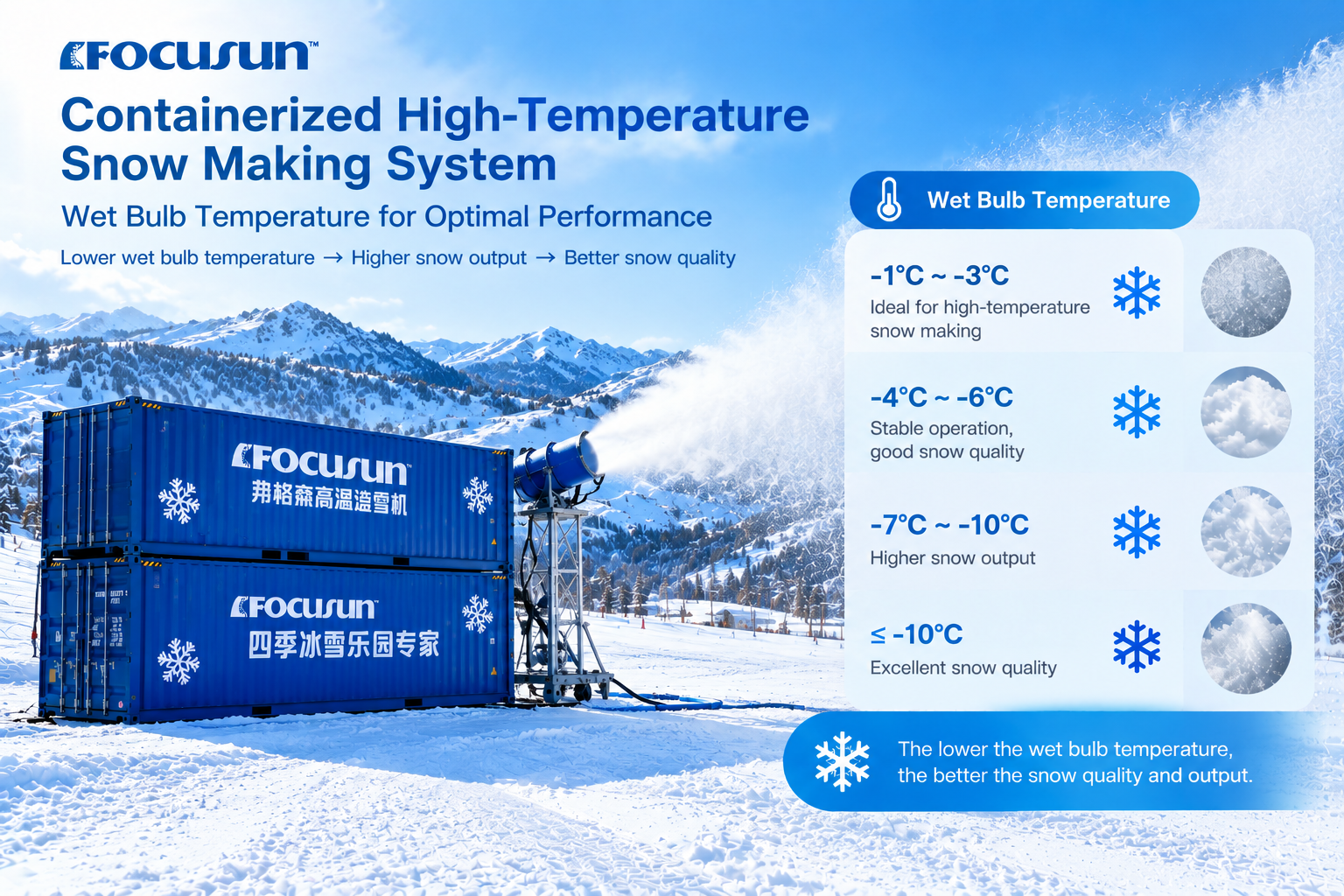
There’s no single universal wet-bulb threshold that applies to every system. Each snowmaking setup has its own practical operating range, shaped by its equipment design and configuration.
As wet-bulb temperature rises toward that range’s upper limit, production efficiency tends to decline, and the resulting snow can become wetter or less durable. Rather than selecting equipment based on one temperature figure pulled from a spec sheet, project teams should work from manufacturer operating data alongside local weather records for the actual site.
How Humidity Changes Snowmaking Conditions
One of the most common misconceptions in snowmaking is that everything comes down to air temperature. In practice, humidity can matter just as much, sometimes more.
Picture two locations at exactly the same air temperature — say, -3°C. One sits in a dry mountain climate; the other in a humid coastal one. The dry site will almost always offer better snowmaking conditions, because its air can pull more heat away from each water droplet through evaporation. The humid site, despite reading the identical temperature, may struggle to freeze snow efficiently at all. This is why a dry evening can outperform a humid one even when the thermometer says otherwise.
How Snowmaking Teams Monitor Wet-Bulb Conditions
Reliable production depends on tracking conditions continuously, not just checking a forecast once a day. Most operations rely on a combination of:
- On-site weather stations
- Temperature and humidity sensors positioned across the snowmaking area
- Automated system controls that adjust output as conditions shift
- Forecast monitoring to anticipate upcoming windows
- Production adjustments by time of day, since wet-bulb conditions often improve overnight
Internal link: [Snowmaking System Components]
What Else Affects Snow Quality and Output?
Wet-bulb temperature is important, but it’s far from the only variable in play. Other factors that shape the final result include:
- Water temperature and quality
- Snow gun type and nozzle configuration
- Water pressure and compressed air, where applicable
- Wind and snow-drift conditions
- Snowmaking distance and terrain
- Snow grooming and base preparation
Internal links: [Fan Gun vs Lance Snowmaking] · [Snowmaking Water Requirements] · [What Is Snow Grooming?]
What Happens When Conditions Are Too Warm or Humid?
When wet-bulb conditions fall outside a system’s practical operating range, teams typically respond by reducing output, adjusting snowmaking hours to catch cooler overnight windows, or simply waiting for a more favorable stretch of weather.
For warm-climate or year-round projects, that kind of waiting isn’t always acceptable — which is where controlled, refrigeration-based solutions come in. These systems create freezing conditions independent of outdoor wet-bulb temperature entirely, rather than working around it.
Internal link: [What Is All-Weather Snowmaking?]
How Should Project Teams Use Wet-Bulb Data?
For anyone planning a project rather than just running day-to-day operations, wet-bulb data serves a different purpose: it’s a feasibility check.
Project teams should review local wet-bulb data across the intended operating season, including night-time conditions, humidity patterns and seasonal variation. That data determines whether conventional snowmaking can realistically meet the required snow volume for the site — or whether the project needs a different production approach altogether, such as all-weather or indoor refrigeration-based snowmaking.
Explore snowmaking equipment options or discuss local operating conditions with Focusun’s project team.
Internal link: [How to Choose a Snowmaking Machine]
Frequently Asked Questions
- Is wet-bulb temperature the same as air temperature?
Air temperature measures the surrounding air, while wet-bulb temperature also reflects the cooling effect of evaporation and is influenced by humidity.
- Why can snowmaking work better on a dry night?
Dry air allows more evaporation from fine water droplets, helping them cool and freeze more effectively.
- Can conventional snowmaking work above freezing?
In some conditions, a favorable wet-bulb temperature may allow limited production even when the air temperature is near or slightly above freezing. The result depends on the system and the full operating conditions.
- Does all-weather snowmaking depend on wet-bulb temperature?
Less directly. All-weather systems use refrigeration to create controlled freezing conditions, making them suitable for locations where outdoor conditions are unreliable.
Related Resources

 10-14-2026