How Does Snowmaking Work?
Snowmaking produces snow by turning water into fine droplets and freezing them under suitable conditions. Most outdoor systems rely on cold, dry air, while all-weather systems create freezing conditions inside the equipment.
Snowmaking in One Minute
At its core, snowmaking follows the same basic sequence, regardless of equipment type:
- Water is supplied and filtered. Clean, debris-free water is the starting point for consistent snow quality — sediment or organic matter in the water can clog nozzles and disrupt droplet size.
- Pumps deliver water to the snowmaking system. Pressurized water travels through pipelines to the point of production, often across long distances on larger sites.
- Water is atomized into fine droplets. Nozzles break the water stream into small, uniform particles — the finer the droplet, the faster it can freeze.
- The droplets freeze and settle as snow. Given the right conditions, those droplets crystallize before they reach the ground and build up as a snow layer.
Everything else — equipment design, energy use, snow quality — comes down to how reliably a system can complete that fourth step, under whatever conditions the site presents.
Why Temperature and Humidity Matter
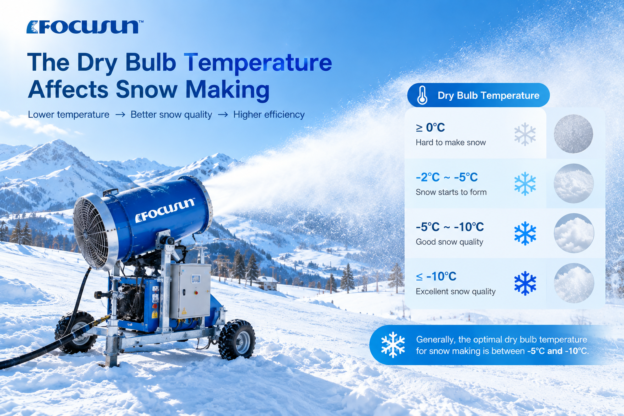
Air temperature is important, but it isn’t the only factor. What actually determines whether snowmaking will work is
wet-bulb temperature — a measurement that combines air temperature and humidity into a single number.
Drier air can improve freezing conditions even when the air temperature itself isn’t especially low, because dry air pulls moisture from the water droplets through evaporation, cooling them further as they fall. Humid air does the opposite: it slows evaporation and makes freezing harder, even at a temperature that would otherwise seem cold enough. This is why two locations at the exact same air temperature can have completely different snowmaking windows — one dry and productive, the other too humid to make usable snow.
When conditions fall outside the suitable range, production output and snow quality can decline sharply — water droplets may only partially freeze, resulting in wet, heavy snow or, in the worst case, no snow at all. This is also why snowmaking teams monitor wet-bulb temperature continuously rather than checking a single forecast number once a day; conditions can shift enough within a few hours to open or close a usable production window.
The Main Parts of a Snowmaking System
A snow gun rarely works alone.
A complete snowmaking system typically includes:
- Water source and water treatment — filtering out sediment and debris before water enters the system, and in some cases treating it to reduce mineral buildup in pipelines
- Pump station — pressurizing water for delivery across the site, sized to match both flow rate and distance
- Air compressor, where required — some snow gun designs use compressed air to help atomize water and improve droplet consistency
- Snowmaking pipelines — the network that moves water (and air, if used) from the pump station to each gun, often buried to prevent freezing in transit
- Snow guns or lance snowmakers — the equipment that actually converts water into snow
- Control system and weather monitoring — software and sensors that adjust output based on real-time wet-bulb conditions, so production scales up or down automatically as weather shifts
Each part affects the others. A powerful snow gun paired with an undersized pump station, for example, won’t reach its rated output — the system only performs as well as its weakest link, which is why snowmaking is usually planned as one integrated system rather than a collection of separate purchases.
How Snow Guns Turn Water Into Snow
Traditional outdoor snowmaking follows a fairly consistent physical process:
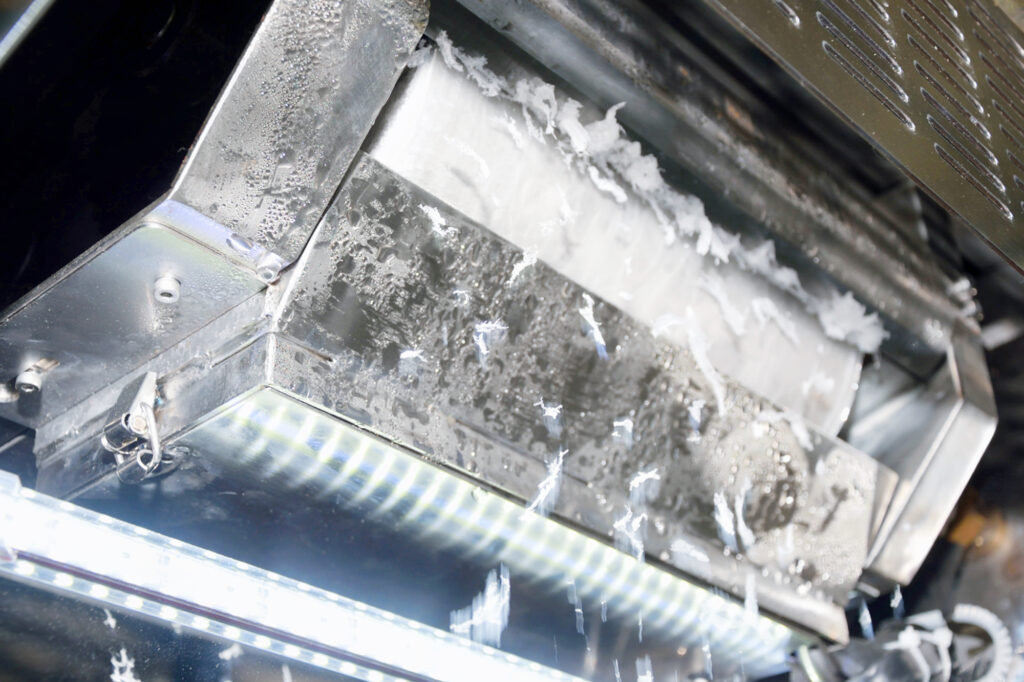
- Water is broken into small droplets, typically by forcing it through nozzles at high pressure, sometimes with compressed air assistance.
- Nucleation helps ice crystals begin to form. Many systems add a nucleating agent or use specialized nozzle designs to give ice crystals a starting point, since pure water droplets can resist freezing even below 0°C without one — a phenomenon known as supercooling.
- Droplets freeze while moving through cold air, losing heat during their time in flight before reaching the ground. The longer the flight time and the drier the air, the more complete the freezing process.
The resulting snow collects on the slope or snow-play area, building up as a base layer that can then be groomed and shaped into a usable surface.
Snow gun designs generally fall into two categories: fan guns, which use a powerful fan to project a wide spray over a large area and cover ground quickly, and lance snowmakers, which are taller, narrower units that rely more on height and air pressure than fan power, giving droplets more time in the air before landing. Each has different strengths depending on terrain, wind conditions and coverage needs — fan guns tend to suit open, high-traffic areas, while lances are often favored where precision and wind resistance matter more than raw coverage speed.
What Is the Difference Between Natural and Machine-Made Snow?
| Factor |
Natural Snow |
Machine-Made Snow |
| How it forms |
Atmospheric conditions |
Controlled water freezing |
| Crystal structure |
Varies with weather |
Usually denser and more uniform |
| Typical use |
Natural winter coverage |
Slope base building, season extension, indoor venues |
| Control |
Weather-dependent |
Managed through system operation and conditions |
Neither type is inherently “better” — they serve different purposes. Natural snowfall is unpredictable but forms the light, varied crystal structure skiers associate with fresh powder. Machine-made snow is denser and more uniform, which is exactly why resorts use it to build a durable base layer that holds up under heavy traffic, rather than relying on natural snowfall alone to survive an entire season of daily use.
Can Snow Be Made in Warm Weather?
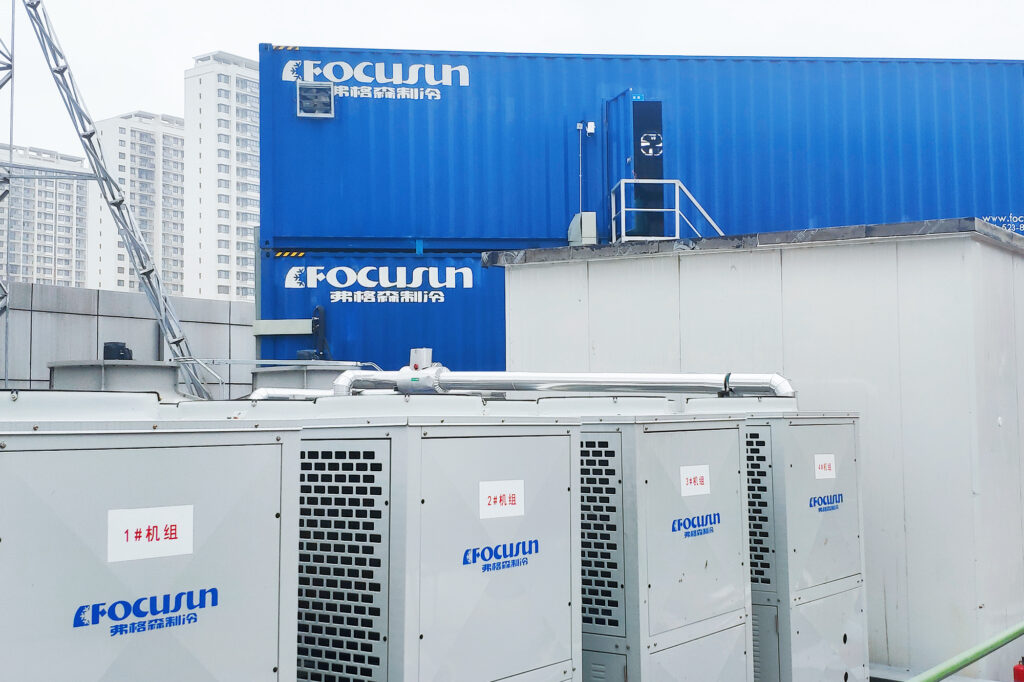
Traditional snow guns are generally limited by wet-bulb temperature — once conditions get too warm or too humid, conventional equipment simply can’t freeze water fast enough to produce usable snow. In warm or humid environments, projects typically need
all-weather snowmaking or an
indoor refrigeration solution instead, both of which create freezing conditions independent of the outdoor climate rather than waiting for the weather to cooperate.
This matters most for:
- Indoor ski slopes
- Snow parks in warm climates
- Desert or tropical attractions
Seasonal events requiring scheduled snow production, regardless of the weather on the day
For any of these cases, equipment selection should start from the operating environment, not the other way around — a system designed for a cold, dry mountain climate will rarely perform well if simply relocated to a warm or humid site.
How Do Resorts Maintain Snow After It Is Made?
Snowmaking isn’t a one-time task — the snow on the ground needs ongoing management to stay usable throughout a season or an indoor venue’s operating life:
- Snow grooming shapes and redistributes snow to maintain a consistent surface, breaking up ice patches and smoothing wear from daily traffic.
- Surface management addresses wear, icing and compaction from repeated use, particularly in high-traffic zones near lifts or entrances.
- Snow-depth monitoring tracks coverage across the site so gaps get refilled before they become a safety or quality issue.
- Snow storage or redistribution lets resorts stockpile snow in one location, sometimes insulated to survive warmer months, and move it elsewhere as needed.
- Humidity and air-flow management keeps indoor facilities from developing condensation or surface softening, which can undo the work of a well-designed snowmaking system if left unmanaged.
What Should Project Teams Consider Before Choosing a Snowmaking System?
Selecting the right snowmaking system means working through several inputs before comparing equipment:
- Required snow output and peak demand
- Local wet-bulb conditions
- Target snow quality and use case
- Water, power, compressed air and drainage availability
- Site layout and snow delivery distance
- Operating hours and maintenance access
- Energy use and wider refrigeration requirements
Getting these details right before evaluating specific equipment models is what separates a system sized correctly for a site from one that underperforms — or costs far more to run than expected. Two sites with similar snow output goals can need very different equipment once wet-bulb conditions, layout and infrastructure are factored in, which is why a proper system assessment starts with the site, not a spec sheet.
Need help defining a snowmaking system for your site? Explore the equipment guide or
speak with Focusun’s project team.
Related Resources
What Is Wet-Bulb Temperature for Snowmaking?
What Is All-Weather Snowmaking?
How Do Indoor Ski Slopes Stay Cold?
How to Choose a Snowmaking Machine
How to Maintain Indoor Snow Quality

 10-14-2026